K.E.S.S. - The "Keep Exercise Simple Stupid" Method
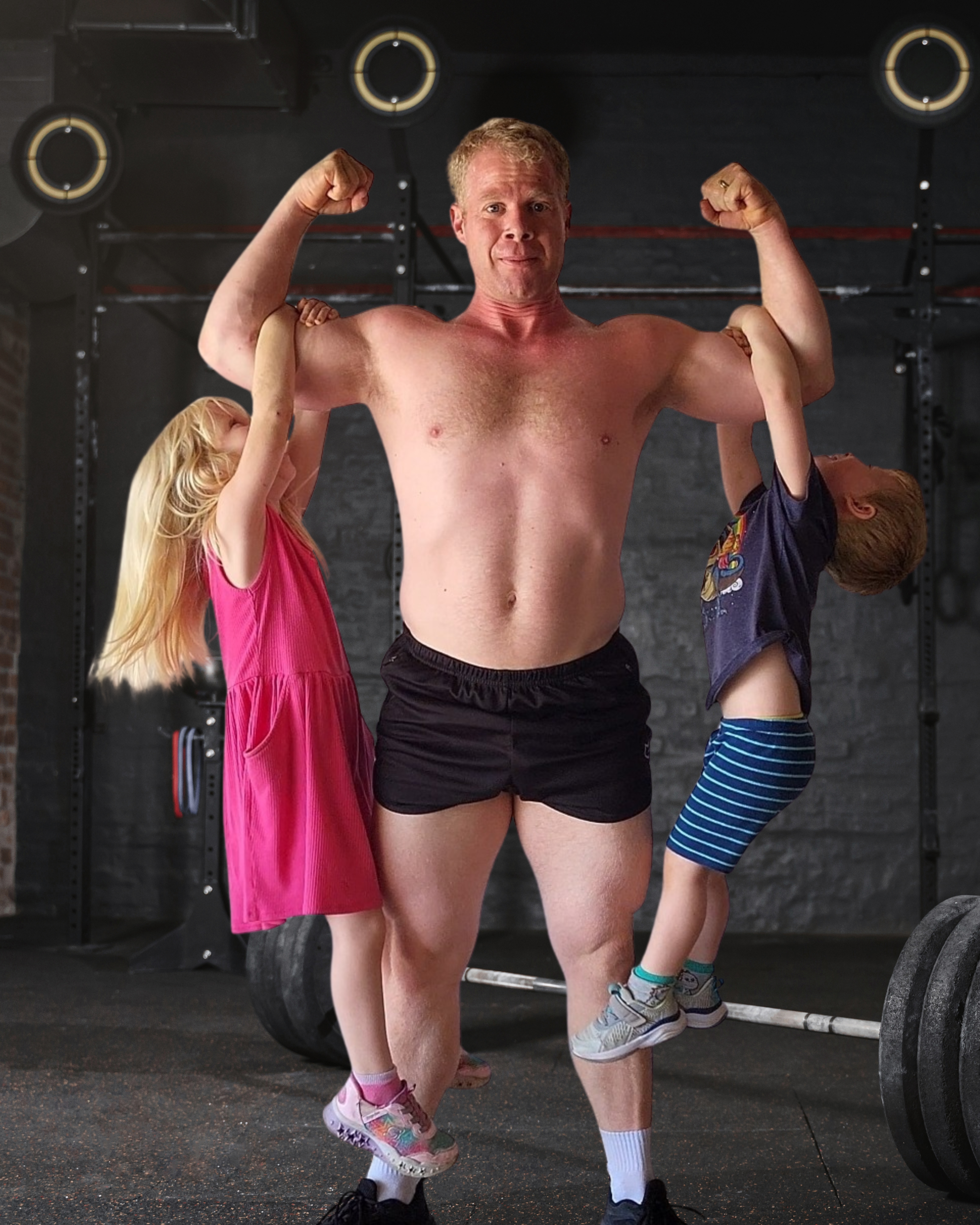
Fitness has become unnecessarily complicated.
Walk into a gym, open social media, or search for a workout online, and you'll quickly find yourself surrounded by specialized programs, complicated routines, supplements, technical jargon, and endless debates about the “right” way to train by wellness and lifestyle gurus, fitness coaches, influencers, bodybuilders, and the list goes on and on. Everyone has their opinion, promise, and secret sauce to fitness success. It's hard to separate the Bullshit from what really works.
For most of us, the average person, we don't need complicated fitness. All we need is fuckin simple fitness that works for us.
That is the idea behind K.E.S.S., or Keep Exercise Simple Stupid.
K.E.S.S. is an unofficial (”unofficial,” because I thought it up in an epiphany from the Great Spaghetti Monster in the sky) fitness philosophy built around a straight forward principle: return to the basics, focus on what the human body is designed to do, and make fitness useful for everyday life.
It isn't designed to turn the average person into a bodybuilder, professional athlete, or fitness model. It is designed for something much more practical: to help ordinary people become stronger, healthier, fitter, and more capable of handling whatever life puts in front of them without the overwhelming and often unrealistic goals and expectations many personal trainers and fitness gurus push for.
Back to the Basics
At its core, K.E.S.S. is all about returning to the fundamentals of fitness.
Humans have always needed to move. We walk, run, climb, carry, lift, push, pull, squat, bend, reach, and work. Our bodies developed around these basic movements long before gyms, machines, fitness apps, and complicated training systems existed.
K.E.S.S. asks a simple question:
What does a person actually need their body to be able to do?
The answer isn't necessarily bench-pressing a certain amount of weight or running a particular race time.
A fit person should be able to carry groceries, climb stairs, lift something from the ground, move furniture, walk for hours, get up from the floor, carry a child, hike a trail, shovel snow, work in the garden, or react when something unexpected happens.
Fitness should prepare us for life, not just for the systematic and predictable movements at the gym.
That means returning to the movements that matter, the movements of real life.
Eliminate the Complexity
One of the biggest problems with modern fitness is that it can make people believe they need to understand everything before they even begin.
Well, they don't.
The average person doesn't need to know every exercise variation, understand advanced programming theory, or spend hours researching the newest training method, or stress over what movements are the MOST effective fore muscle growth or fat loss.
They only need to understand a handful of very basic ideas:
Move more. Use your muscles. Challenge your body. Get stronger. Build endurance. Recover. Eat reasonably well. Repeat.
That's what K.E.S.S. is all about. Really, K.E.S.S. is functional fitness re-bundled, polished, and presented to you in a simplistic “keep it simple, stupid” kind of way. BTW, I am not calling everyone idiots, I’m using that term in a loving and enduring way to say… “Hey, we all got other priorities in our fuckin busy lives, and studying kinesiology to better ourselves is not part of it.”
Simplicity doesn't mean that fitness is effortless. It means that the method is easy to understand.
A simple K.E.S.S. workout might revolve around fundamental movements such as squatting, hinging, pushing, pulling, carrying, walking, running, climbing, and getting down and back up from the ground.
These movements can be adapted to almost any person, environment, or fitness level.
A beginner might perform bodyweight squats and carry light objects.
A stronger person might squat with weight and carry a heavy load.
The movement remains recognizable. The difficulty changes.
That's an important part of K.E.S.S.: fitness should be scalable without becoming complicated. It also stays applicable to life. There are absolutely no fuckin stupid CrossFit-style kipping pull-ups in this fitness philosophy.
Functional Fitness for Real Life
K.E.S.S. places functional fitness at the center of training.
“Functional” doesn't have to mean performing exotic exercises on unstable surfaces or turning every workout into an obstacle course. Functional fitness simply means developing physical abilities that have value outside the gym.
Strength is functional.
Endurance is functional.
Balance is functional.
Mobility is functional.
Coordination is functional.
The ability to control your body is functional.
The ability to pick something heavy up safely and carry it somewhere is functional.
A good K.E.S.S. program therefore looks at your life, personal goals, and possible life expectations and outliers, and then trains the body as a system rather than obsessing over looks and bodily physique.
Instead of asking, “How do I isolate this muscle?”, K.E.S.S. is more interested in asking, “What can my body do?”
That distinction changes the purpose of training.
The goal isn't simply to look capable, or build the physique of a Greek god.
The goal is to be capable, and sexiness of body is more of an afterthought.
Fitness for the Average Person
K.E.S.S. isn't intended to compete with bodybuilding, powerlifting, or professional athletic training.
Those disciplines have their place. Competitive athletes, fitness influencers, and bodybuilders have highly specific goals, and their training and diet often need to become highly specialized to meet those goals.
The average person has a different problem.
They aren't trying to win a championship.
They're trying to live their life and just be the best version of themselves for that purpose.
They want enough energy to get through the day. They want to remain strong as they age. They want to play with their children. They want to enjoy weekends without being exhausted. They want to travel, hike, work, garden, move house, climb stairs, be ready for life’s emergencies, and enjoy living without their body constantly holding them back.
K.E.S.S. is built for those people.
Its goal isn't maximum performance.
Its goal is useful performance.
You don't necessarily need to be the strongest person in the room. You need to be strong enough for the room.
You don't need to run a marathon. You need enough cardiovascular fitness to keep moving when life demands it and not lose your breath over short walks or physical exertion.
You don't need the physique of a professional athlete. You need a body that is healthy, resilient, and capable.
Training for the Unexpected
Life doesn't follow a workout plan.
You might have to move a heavy box. Carry someone who has fallen. Walk a long distance because your car breaks down. Climb stairs when an elevator stops working. Spend an entire day on your feet. Help a friend move house. Dig in the garden. Carry luggage through an airport. Take a long hike you didn't expect to take.
These situations aren't scheduled.
That's why K.E.S.S. also views fitness as a form of life preparedness.
You train so that when something unexpected happens, your body has more capacity to deal with it.
Fitness creates a physical reserve.
If everyday life normally requires 40 percent of your physical capacity, having a body capable of considerably more gives you room when something goes wrong.
That reserve can make ordinary challenges easier and unexpected challenges more manageable.
K.E.S.S. isn't about predicting exactly what life will throw at you.
It's about building a body that is ready for whatever comes next, whether that is living through a natural disaster, a traumatic injury, or assisting others in need.
Work Is a Form of Fitness
There is another important idea behind K.E.S.S.: much of traditional physical labor naturally resembles functional fitness training, hence why it is called “functional fitness.”
Think about what physical work actually involves.
A construction worker carries materials.
A farmer lifts, carries, digs, bends, pulls, and walks.
A warehouse worker repeatedly moves objects.
A gardener squats, kneels, digs, carries, and works with tools.
A person moving house lifts boxes, carries awkward objects, climbs stairs, bends, twists, and spends hours on their feet.
These activities don't necessarily always look like traditional gym exercises, but they place real demands on the body.
K.E.S.S. takes inspiration from this reality.
The body responds to work, and the body at work does not always follow the rigid, methodical movements of exercises in the gym.
When muscles are repeatedly challenged by resistance and movement, they adapt. When the cardiovascular system is challenged by sustained activity, it adapts. When the body regularly moves through different positions and patterns, coordination and physical competence can improve.
This is one reason simple exercises can be so effective.
A loaded carry isn't complicated.
Picking something up isn't complicated.
Walking uphill isn't complicated.
Climbing stairs isn't complicated.
Squatting, pushing, pulling, twisting, and lifting aren't complicated.
Yet these basic movements can create substantial physical demands when the workload is appropriate and progressively increased.
Building Muscle and Losing Fat Through Useful Work
K.E.S.S. connects fitness to one of the oldest forms of exercise there is: physical work.
Muscle is built when the body is given a sufficient training stimulus and then allowed to recover and adapt. Resistance training provides that stimulus by asking muscles to produce force against a load.
At the same time, physical activity uses energy.
Walking, carrying, lifting, climbing, running, and other forms of movement all contribute to energy expenditure. Combined with appropriate nutrition, regular activity can help create the conditions needed for reducing body fat.
This is where K.E.S.S. avoids another common fitness mistake: treating fat loss and muscle development as completely separate worlds. Let’s focus on what is important to you in life, and that is getting things done that need to be done. Let’s worry about the other stuff after getting the foundation of being physically prepared for life down. You will find that the more you adapt and surround your life with healthy living (importantly, at your own pace—not forced), the easier it is—the knowledge will come too.
A person doesn't need a complicated collection of machines and specialized exercises.
They can train their muscles while moving their body.
They can carry.
They can lift.
They can push.
They can pull.
They can squat.
They can walk.
They can climb.
They can work.
The body responds to physical demand, whether that demand comes from a barbell, a dumbbell, a backpack, a shovel, a box, or any other appropriate form of resistance.
Of course, nutrition, sleep, recovery, training volume, and individual circumstances all influence the results. But the underlying principle remains simple:
Give the body useful work, progressively challenge it, and give it the resources it needs to recover.
Keep Food Simple Too
K.E.S.S. shouldn't stop at exercise.
If the goal is to become stronger, healthier, fitter, and more capable, then what we put into our bodies matters too. And just like exercise, nutrition has become unnecessarily complicated.
There are endless diets, eating systems, supplements, powders, rules, restrictions, and conflicting opinions about what people should eat.
K.E.S.S. takes the same approach to food as it does to exercise:
Get back to the basics.
Eat more food that looks like food.
That means building the foundation of your diet around whole and fresh foods: vegetables, fruits, potatoes, whole grains, beans, nuts, seeds, eggs, fish, meat, and other minimally processed foods that provide the body with useful nutrients.
At the same time, K.E.S.S. encourages people to reduce their reliance on heavily processed foods.
This doesn't mean that every processed food is automatically bad, or that people need to follow a perfect diet. Processing can be useful and practical. Frozen vegetables, canned beans, pasteurized milk, whole-grain bread, and many other processed foods can be part of a healthy diet.
The concern is allowing heavily processed, highly palatable foods to become the foundation of everyday eating.
K.E.S.S. therefore doesn't ask, “What is the perfect diet?”
It asks a much simpler question:
“What kind of food should make up most of my diet?”
The answer is simple:
More whole foods. More fresh food. Less heavily processed food.
Eat for the Body You Want to Use
Food isn't just about calories or body weight.
Food provides the raw materials the body needs to function, recover, and adapt to exercise.
Protein provides amino acids needed for maintaining and building muscle. Fruits and vegetables provide vitamins, minerals, fiber, and other beneficial compounds. Whole-food sources of carbohydrates can provide energy for activity. Healthy sources of dietary fat provide energy and essential fatty acids.
In other words, nutrition should support the same goal as K.E.S.S. exercise:
Build a body that works.
You don't need to turn every meal into a mathematical equation.
A simple meal might contain a source of protein, some vegetables or fruit, a useful source of carbohydrates, and an appropriate amount of healthy fat.
The exact combination can change depending on the person, their goals, culture, preferences, and activity level.
The philosophy remains the same:
Keep it simple. Eat real food most of the time.
Don't Chase Perfection
K.E.S.S. isn't about creating another set of impossible rules.
Nobody, especially us average people, needs to eat perfectly.
Birthdays happen. Holidays happen. Restaurants happen. Pizza happens.
A healthy approach to food should be sustainable enough to survive real life.
The goal isn't to eliminate every cookie, piece of chocolate, takeaway meal, or favorite treat. The goal is to make nutritious, minimally processed foods the foundation of everyday eating rather than the exception.
Think of it as a simple shift in priorities:
More whole. Less heavily processed. More fresh. Less unnecessary complexity.
The same philosophy applies to both food and exercise.
You don't need perfection.
You need habits that you can repeat.
And when those simple habits are repeated for months and years, they can create something far more valuable than a short-term diet or workout program: a healthier way of living.
Simple Doesn't Mean Easy
This is perhaps the most important distinction in K.E.S.S.
Simple does not mean easy.
A simple workout can be brutally effective.
Walking uphill with a heavy backpack is simple.
Carrying heavy objects is simple.
Performing repeated squats is simple.
Pushing something heavy is simple.
Running up stairs is simple.
None of these activities require complicated equipment or a PhD in exercise science.
But they can still challenge the body.
K.E.S.S. removes unnecessary complexity from the method, not the effort.
The exercises may be simple.
The commitment isn't.
Progress still requires consistency, patience, discipline, and gradually increasing the challenge. And if you are NOT seeing the progress you desire, it does not take a fuckin rocket scientist to understand that you must tweak either your diet and/or exercise to see those changes.
The K.E.S.S. Philosophy
Ultimately, K.E.S.S. comes down to a few basic ideas:
Move your body regularly.
Build useful strength.
Develop cardiovascular endurance.
Train movements rather than obsessing over individual muscles.
Carry, lift, push, pull, squat, hinge, walk, run, climb, and move.
Progress gradually.
Recover properly.
Eat more whole and fresh foods.
Reduce your reliance on heavily processed foods.
Keep the training and nutrition simple enough that you can actually stick with them without burning out or giving up.
Train for life, not just for the gym.
None of this is revolutionary, and that is precisely the point of Keeping Exercise Simple Stupid.
K.E.S.S. isn't reinventing fitness. It's just removing the noise surrounding it in our cluttered and busy lives.
Fitness That Follows You Into Life
The ultimate measure of fitness shouldn't be what happens when you're standing in front of a mirror or sitting on a gym machine.
It should be what happens when life asks something of you.
Can you lift it?
Can you carry it?
Can you walk there?
Can you climb those stairs?
Can you keep going?
Can you get back up?
Can you help someone else?
Can you fuel your body with food that supports the life you're trying to live?
Can you enjoy the physical parts of your life without your body constantly limiting you?
Can you handle the unexpected?
That's the philosophy behind K.E.S.S.
Keep Exercise Simple Stupid.
Strip away the unnecessary complexity and craziness of whatever the current fitness fad is. Return to fundamental movements. Build strength, endurance, mobility, coordination, and resilience. Eat more whole and fresh foods. Reduce the heavily processed foods that have come to dominate modern diets. Give your body the work, nutrition, and recovery it needs.
Train for the things you actually do.
Eat to support the body you actually use.
And build fitness that doesn't end when you leave the gym.
Because personal fitness isn't ultimately about what your body can do in a gym or what it looks like in the mirror.
It's about what your body allows you to do with your life.

Comments